In mathematics, the projection-slice theorem, central slice theorem or Fourier slice theorem in two dimensions states that the results of the following two calculations are equal: Take a two-dimensional function f(r), project (e.g. using the Radon transform) it onto a (one-dimensional) line, and do a Fourier transform of that projection. Take that same function, but do a two-dimensional Fourier transform first, and then slice the function through its origin, parallel to the projection line. In operator terms, if F1 and F2 are the 1- and 2-dimensional Fourier transform operators mentioned above, P1 is the projection operator (which projects a 2-D function onto a 1-D line), S1 is a slice operator (which extracts a 1-D central slice from a function), then F 1 P 1 = S 1 F 2 . {\displaystyle F_{1}P_{1}=S_{1}F_{2}.} This idea can be extended to higher dimensions. This theorem is used, for example, in the analysis of medical CT scans where a "projection" is an x-ray image of an internal organ. The Fourier transforms of these images are seen to be slices through the Fourier transform of the 3-dimensional density of the internal organ, and these slices can be interpolated to build up a complete Fourier transform of that density. The inverse Fourier transform is then used to recover the 3-dimensional density of the object. This technique was first derived by Ronald N. Bracewell in 1956 for a radio-astronomy problem. == The projection-slice theorem in N dimensions == In N dimensions, the projection-slice theorem states that the Fourier transform of the projection of an N-dimensional function f(r) onto an m-dimensional linear submanifold is equal to an m-dimensional slice of the N-dimensional Fourier transform of that function consisting of an m-dimensional linear submanifold through the origin in the Fourier space which is parallel to the projection submanifold. In operator terms: F m P m = S m F N . {\displaystyle F_{m}P_{m}=S_{m}F_{N}.\,} == The generalized Fourier-slice theorem == In addition to generalizing to N dimensions, the projection-slice theorem can be further generalized with an arbitrary change of basis. For convenience of notation, we consider the change of basis to be represented as B, an N-by-N invertible matrix operating on N-dimensional column vectors. Then the generalized Fourier-slice theorem can be stated as F m P m B = S m B − T | B − T | F N {\displaystyle F_{m}P_{m}B=S_{m}{\frac {B^{-T}}{|B^{-T}|}}F_{N}} where B − T = ( B − 1 ) T {\displaystyle B^{-T}=(B^{-1})^{T}} is the transpose of the inverse of the change of basis transform. == Proof in two dimensions == The projection-slice theorem is easily proven for the case of two dimensions. Without loss of generality, we can take the projection line to be the x-axis. There is no loss of generality because if we use a shifted and rotated line, the law still applies. Using a shifted line (in y) gives the same projection and therefore the same 1D Fourier transform results. The rotated function is the Fourier pair of the rotated Fourier transform, for which the theorem again holds. If f(x, y) is a two-dimensional function, then the projection of f(x, y) onto the x axis is p(x) where p ( x ) = ∫ − ∞ ∞ f ( x , y ) d y . {\displaystyle p(x)=\int _{-\infty }^{\infty }f(x,y)\,dy.} The Fourier transform of f ( x , y ) {\displaystyle f(x,y)} is F ( k x , k y ) = ∫ − ∞ ∞ ∫ − ∞ ∞ f ( x , y ) e − 2 π i ( x k x + y k y ) d x d y . {\displaystyle F(k_{x},k_{y})=\int _{-\infty }^{\infty }\int _{-\infty }^{\infty }f(x,y)\,e^{-2\pi i(xk_{x}+yk_{y})}\,dxdy.} The slice is then s ( k x ) {\displaystyle s(k_{x})} s ( k x ) = F ( k x , 0 ) = ∫ − ∞ ∞ ∫ − ∞ ∞ f ( x , y ) e − 2 π i x k x d x d y {\displaystyle s(k_{x})=F(k_{x},0)=\int _{-\infty }^{\infty }\int _{-\infty }^{\infty }f(x,y)\,e^{-2\pi ixk_{x}}\,dxdy} = ∫ − ∞ ∞ [ ∫ − ∞ ∞ f ( x , y ) d y ] e − 2 π i x k x d x {\displaystyle =\int _{-\infty }^{\infty }\left[\int _{-\infty }^{\infty }f(x,y)\,dy\right]\,e^{-2\pi ixk_{x}}dx} = ∫ − ∞ ∞ p ( x ) e − 2 π i x k x d x {\displaystyle =\int _{-\infty }^{\infty }p(x)\,e^{-2\pi ixk_{x}}dx} which is just the Fourier transform of p(x). The proof for higher dimensions is easily generalized from the above example. == The FHA cycle == If the two-dimensional function f(r) is circularly symmetric, it may be represented as f(r), where r = |r|. In this case the projection onto any projection line will be the Abel transform of f(r). The two-dimensional Fourier transform of f(r) will be a circularly symmetric function given by the zeroth-order Hankel transform of f(r), which will therefore also represent any slice through the origin. The projection-slice theorem then states that the Fourier transform of the projection equals the slice or F 1 A 1 = H , {\displaystyle F_{1}A_{1}=H,} where A1 represents the Abel-transform operator, projecting a two-dimensional circularly symmetric function onto a one-dimensional line, F1 represents the 1-D Fourier-transform operator, and H represents the zeroth-order Hankel-transform operator. == Extension to fan beam or cone-beam CT == The projection-slice theorem is suitable for CT image reconstruction with parallel beam projections. It does not directly apply to fanbeam or conebeam CT. The theorem was extended to fan-beam and conebeam CT image reconstruction by Shuang-ren Zhao in 1995.
Screen generator
A screen generator, also known as a screen painter, screen mapper, or forms generator is a software package (or component thereof) which enables data entry screens to be generated declaratively, by "painting" them on the screen WYSIWYG-style, or through filling-in forms, rather than requiring writing of code to display them manually. 4GLs commonly incorporate a screen generator feature. They are also commonly found bundled with database systems, especially entry-level databases. A screen generator is one aspect of an application generator, which can also include other functions such as report generation and a data dictionary. The earliest screen generators were character-based; by the 1990s, GUI support became common, and then support for generating HTML forms as well. Some screen generators work by generating code to display the screen in a high-level language (for example, COBOL); others store the screen definition in a data file or in database tables, and then have a runtime component responsible for actually displaying the form and receiving and validating user input. == Examples == Examples of screen generators include: IBM Screen Definition Facility II: generates screens for CICS BMS, IMS MFS, ISPF, GDDM and CSP/AD. Performix for Informix. Microsoft Visual Basic the forms component of Microsoft Access Oracle Developer, in particular its Oracle Forms component the QDesign component of PowerHouse SystemBuilder/SB+ the Screen Painter component of SAP's ABAP Workbench the FoxView component of FoxPro. FoxView was originally developed by Luis Castro as a dBASE screen generator named ViewGen; Fox purchased it and bundled it with FoxPro 1.0. Later, Fox replaced Castro's code with their own screen painter code. dBASE included a built-in screen generator in dBASE IV onwards; in dBASE III and earlier, third party screen generators were available, including the already mentioned ViewGen DPS 1100 for UNIVAC 1100 series mainframes.
FactorDaily
FactorDaily is an Indian digital media publication founded in 2016 by Pankaj Mishra and Jayadevan PK. Mishra was formerly an Editor at TechCrunch and the Economic Times. The digital publication was launched with an intent to produce stories on the impact of technology on life in India. == History == FactorDaily began publishing in May 2016, with daily reported stories on technology, culture and life in India. Prior to its launch, the company had raised $1 million in seed funding from Accel India, Blume Ventures, Girish Mathrubootham of Freshdesk, Vijay Shekhar Sharma of PayTm, and Jay Vijayan of Tekion. Josey Puliyenthuruthel John, formerly Managing Editor at Business Today and National Corporate Editor at Mint, later joined the company as a Consulting Editor. In January 2017, FactorDaily launched its first Podcast called The Outliers. The inaugural episode featured a conversation with Manish Sharma of Printo on his journey starting up. == Awards == The FactorDaily team won the Bengaluru Editors Lab 2017, a journalism hackathon organised by the Global Editors Network (GEN). The story titled "India has 3,800 psychiatrists for 1.2bn people. Can tech step in to manage mental health?" won the first prize in the online category of the fifth Schizophrenia Research Foundation’s (SCARF) ‘Media for Mental Health’ awards. The story titled 'The dark hand of tech that stokes sex trafficking in India', won the Stop Slavery media Awards by the Thomson Reuters Foundation for the year 2020.
Homeboyz Interactive
Homeboyz Interactive (HBI) was a faith-based recruitment, training and job placement non-profit business in Milwaukee, Wisconsin, United States, founded by a Jesuit brother in 1996 to transform gang members into productive workers. == History == James Holub, a former Jesuit brother affiliated with Wheeling Jesuit University, asked gang members in the Southside of Milwaukee, WI how they could be helped, to break the cycle of poverty and violence. The youth suggested that they be trained for work they found exciting. To attract interest, the training must lead to jobs that paid at least a living wage, and computer skills seemed the most attractive. The non-profit Homeboyz Interactive was established to prepare professionals in web design, application development, and PC/network support. This non-profit outfit spawned the for-profit web design firm HBI Consulting, which provided trainees with work experience. It turned out more than 20 teachers yearly for computer and computer network programs for high schools and other clients, as well as for computer service providers. Some graduates of the program continued their education, some founded their own business, and others continued working at HBI. The Economist described this effort as "turning thugs into programmers" on Milwaukee's South Side, which has proportionally twice as many murders as New York. Holub had "buried his 28th gang member" before he implemented the Homeboyz plan, with the understanding that "nothing stops a bullet like a job." The programs would pass through about 80 prospects a year who successfully completed training and provide them with a job while studying for their high school equivalency test, before they were asked to decide in which direction to go. Most accepted a job or went on to community college but about 25 entered the Homeboyz training for computer programmers. Of first 150 graduates of this program none lost their job; their average pay after two years was US$63,000. Some preferred to return to full-time work at HBI. By 2002, a total of 142 people had graduated from HBI training and moved into full-time IT careers. The training curriculum as of 2000 included JavaScript and Photoshop, among other web-development tools. In 2000, HBI received a 14% ownership stake in reEmploy.com, a payrolling company, in exchange for the development of an electronic time sheet created by the organization. As of 2001, HBI Consulting, the for profit web design firm, had 72 clients. Among those clients were GE Medical, Toyota Forklift, Northwestern Mutual Life, Verizon Wireless, BP; and Marquette University. Companies that graduates of HBI's training programs secured positions have included Northwestern Mutual and Manpower Inc., United Community Center in Milwaukee and EKI Consulting. A pair of graduates also started their own company in 2002, Innovative Source, a web design firm, which itself has had clients such as the University of Wisconsin-Milwaukee and the Milwaukee Women's Center. This was a common path forward, graduates starting their own consulting firms. In 2004, HBI received a grant for General Support from the Vine and Branches Foundation in the amount of US$120,000. The product Project Foundry found its start in the difficulty of managing project-based learning across dozens of students with widely varying levels of skill, a problem encountered by Shane Krukowski, who developed the software while teaching at HBI. Krukowski subsequently an eponymous company to commercialize the software through a subscription-based business model. Some came to Homeboyz through the criminal courts or Department of Corrections. A Jesuit Volunteer (JV) was assigned to work with the program, and to add a spiritual dimension through regular reflection together. Gradually the market began prioritizing graphic design and flash images more than site construction. After 2006 Homeboyz HBI morphed into several spinoffs and ceased to exist as a separate entity.
Digital media service
A digital media service (DMS) is an online service provider that sells access to digital library of content such as films, software, games, images, literature, etc. While no transfer of property is made, a nearly perfect duplicate of the data (song movie, etc.) is made on a customer's computer. Content is either primarily hosted on a dedicated server, which is owned by the service provider, or it is hosted primarily on the hard drives of its customers using a P2P protocol with, perhaps, a dedicated server to supplement. == History == One example of the older business model is the iTunes Store, which still markets and prices data as individual retail products. There are no examples of the latter business model in operation yet, but one is currently in development by Global Gaming Factory X and expected to begin operation some time after they acquire The Pirate Bay domain on August 27, 2009. A key difference between the two models is that the model which relies on its customer base for offering their bandwidth for other customers to access customer hosted data can operate at significantly lower costs than a company that seeks to limit data access to a per-download fee in order to supplement the cost of using its own hosting and bandwidth. The P2P model holds the potential for companies to offer unlimited access to the largest data library in the history of the internet to its customers for a reasonably low membership rate that is relevant to the cost of operation. While the market is virtually untouched, the P2P supplemented model will need entrepreneurs who are able to overcome a series of challenges in order to compete with the older business model as well as that which is offered for free (and often against the wishes of copyright holders) by hundreds of P2P communities on the internet. These challenges include, but are not limited to: Offering better data quality, speed, convenience and ease of use, protocol, sense of security, indexing and search organization, site up time, data library size, customer support, advertising, artist/copyright holder incentives and compensation, incentives and compensation for customers hosting data and providing bandwidth, guaranteed seeding (available access to indexed data at all times), than competitors.
Artificial wisdom
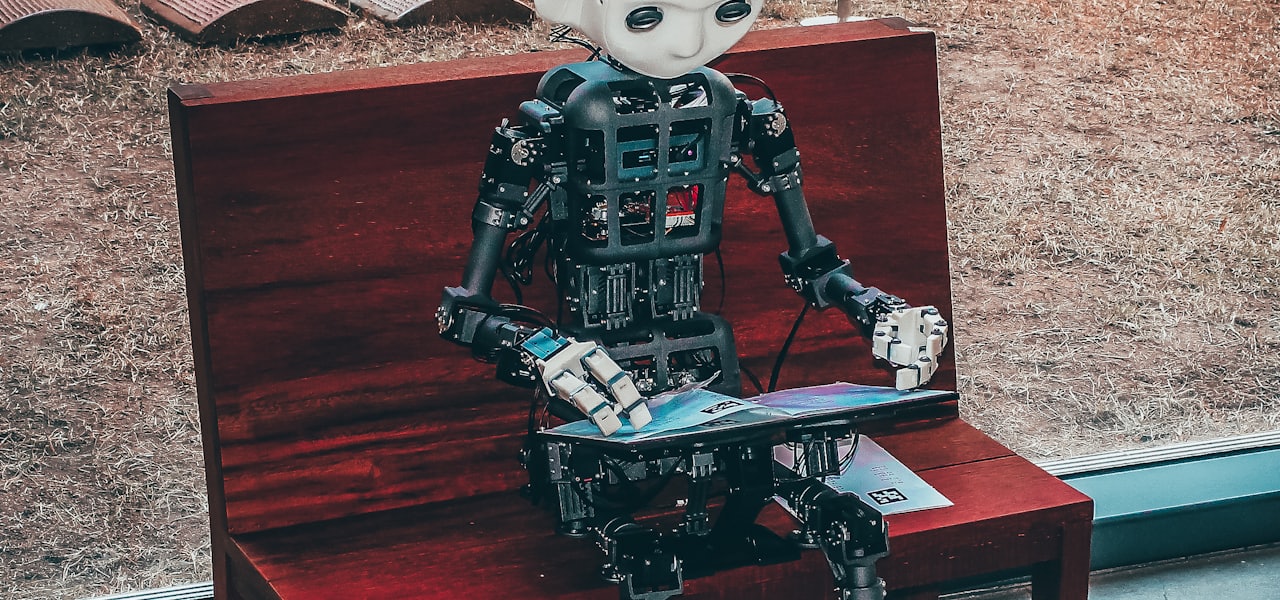
Artificial wisdom (AW) is an artificial intelligence (AI) system which is able to display the human traits of wisdom and morals while being able to contemplate its own “endpoint”. Artificial wisdom can be described as artificial intelligence reaching the top-level of decision-making when confronted with the most complex challenging situations. The term artificial wisdom is used when the "intelligence" is based on more than by chance collecting and interpreting data, but by design enriched with smart and conscience strategies that wise people would use. == Overview == The goal of artificial wisdom is to create artificial intelligence that can successfully replicate the “uniquely human trait[s]” of having wisdom and morals as closely as possible. Thus, artificial wisdom, must “incorporate [the] ethical and moral considerations” of the data it uses. There are also many significant ethical and legal implications of AW which are compounded by the rapid advances in AI and related technologies alongside the lack of the development of ethics, guidelines, and regulations without the oversight of any kind of overarching advisory board. Additionally, there are challenges in how to develop, test, and implement AW in real world scenarios. Existing tests do not test the internal thought process by which a computer system reaches its conclusion, only the result of said process. When examining computer-aided wisdom; the partnership of artificial intelligence and contemplative neuroscience, concerns regarding the future of artificial intelligence shift to a more optimistic viewpoint. This artificial wisdom forms the basis of Louis Molnar's monographic article on artificial philosophy, where he coined the term and proposes how artificial intelligence might view its place in the grand scheme of things. == Definitions == There are no universal or standardized definitions for human intelligence, artificial intelligence, human wisdom, or artificial wisdom. However, the DIKW pyramid, describes the continuum of relationship between data, information, knowledge, and wisdom, puts wisdom at the highest level in its hierarchy. Gottfredson defines intelligence as “the ability to reason, plan, solve problems, think abstractly, comprehend complex ideas, learn quickly, and learn from experience”. Definitions for wisdom typically include requiring: The ability for emotional regulation, Pro-social behaviors (e.g., empathy, compassion, and altruism), Self-reflection, “A balance between decisiveness and acceptance of uncertainty and diversity of perspectives, and social advising.” As previously defined, Artificial Wisdom would then be an AI system which is able to solve problems via “an understanding of…context, ethics and moral principles,” rather than simple pre-defined inputs or “learned patterns.” Some scientists have also considered the field of artificial consciousness. However, Jeste states that “…it is generally agreed that only humans can have consciousness, autonomy, will, and theory of mind.” An artificially wise system must also be able to contemplate its end goal and recognize its own ignorance. Additionally, to contemplate its end goal, a wise system must have a “correct conception of worthwhile goals (broadly speaking) or well-being (narrowly speaking)”. "Stephen Grimm further suggests that the following three types of knowledge are individually necessary for wisdom: first, "knowledge of what is good or important for well-being", second, "knowledge of one’s standing, relative to what is good or important for well-being", and third, "knowledge of a strategy for obtaining what is good or important for wellbeing."" == Problems == There are notable problems with attempting to create an artificially wise system. Consciousness, autonomy, and will are considered strictly human features. === Values === There are significant ethical and philosophical issues when attempting to create an intelligent or a wise system. Notably, whose moral values will be used to train the system to be wise. Differing moral values and prejudice can already be seen from various organizations and governments in artificial intelligence. Deployment strategies and values of Artificial Wisdom will conflict between leaders, companies, and countries. Nusbaum states, “When values are in conflict, leaders often make choices that are clever or smart about their own needs, but are often not wise.” === Ethics === Science fiction author Isaac Asimov realized the need to control the technology in the 1940s when he wrote the three laws of robotics as follows: A robot may not injure a human directly or indirectly. A robot must obey human’s orders. A robot should seek to protect its own existence. Additionally, the pace at which technology is rapidly advancing artificial intelligence and thus the need for artificial wisdom may “have outpaced the development of societal guidelines have raised serious questions about the ethics and morality of AI, and called for international oversight and regulations to ensure safety.” === Principal impossibility === One argument, coined by Tsai as the “argument against AW,” or AAAW, postulates the principal impossibility of Artificial Wisdom. The argument is based on the philosophical differences between practical wisdom, also called phronesis, and practical intelligence. Said difference isn’t in “selecting the correct means, but reasoning correctly about what ends to follow”. Tsai puts the argument into a logical proposition as follows: “(P1) An agent is genuinely wise only if the agent can deliberate about the final goal of the domain in which the agent is situated.” “(P2) An intelligent agent cannot deliberate about the final goal of the domain in which the agent is situated.” “(C1) An intelligent agent cannot be genuinely wise.” “(P3) An AW is, at its core, intelligent.” “(C2) An AW cannot be genuinely wise.”
Zero-overhead looping
In computer architecture, zero-overhead looping is a hardware feature found in some processors that enables loops to execute without the performance cost of traditional loop control instructions. Instead of software managing loop iterations, the processor's hardware handles repetition automatically, saving clock cycles and improving efficiency. This technique is commonly employed in digital signal processors (DSPs) and certain complex instruction set computer (CISC) architectures. == Background == In many instruction sets, a loop must be implemented by using instructions to increment or decrement a counter, check whether the end of the loop has been reached, and if not jump to the beginning of the loop so it can be repeated. Although this typically only represents around 3–16 bytes of space for each loop, even that small amount could be significant depending on the size of the CPU caches. More significant is that those instructions each take time to execute, time which is not spent doing useful work. The overhead of such a loop is apparent compared to a completely unrolled loop, in which the body of the loop is duplicated exactly as many times as it will execute. In that case, no space or execution time is wasted on instructions to repeat the body of the loop. However, the duplication caused by loop unrolling can significantly increase code size, and the larger size can even impact execution time due to cache misses. (For this reason, it's common to only partially unroll loops, such as transforming it into a loop which performs the work of four iterations in one step before repeating. This balances the advantages of unrolling with the overhead of repeating the loop.) Moreover, completely unrolling a loop is only possible for a limited number of loops: those whose number of iterations is known at compile time. For example, the following C code could be compiled and optimized into the following x86 assembly code: == Implementation == Processors with zero-overhead looping have machine instructions and registers to automatically repeat one or more instructions. Depending on the instructions available, these may only be suitable for count-controlled loops ("for loops") in which the number of iterations can be calculated in advance, or only for condition-controlled loops ("while loops") such as operations on null-terminated strings. === Examples === ==== PIC ==== In the PIC instruction set, the REPEAT and DO instructions implement zero-overhead loops. REPEAT only repeats a single instruction, while DO repeats a specified number of following instructions. ==== Blackfin ==== Blackfin offers two zero-overhead loops. The loops can be nested; if both hardware loops are configured with the same "loop end" address, loop 1 will behave as the inner loop and repeat, and loop 0 will behave as the outer loop and repeat only if loop 1 would not repeat. Loops are controlled using the LTx and LBx registers (x either 0 to 1) to set the top and bottom of the loop — that is, the first and last instructions to be executed, which can be the same for a loop with only one instruction — and LCx for the loop count. The loop repeats if LCx is nonzero at the end of the loop, in which case LCx is decremented. The loop registers can be set manually, but this would typically consume 6 bytes to load the registers, and 8–16 bytes to set up the values to be loaded. More common is to use the loop setup instruction (represented in assembly as either LOOP with pseudo-instruction LOOP_BEGIN and LOOP_END, or in a single line as LSETUP), which optionally initializes LCx and sets LTx and LBx to the desired values. This only requires 4–6 bytes, but can only set LTx and LBx within a limited range relative to where the loop setup instruction is located. ==== x86 ==== The x86 assembly language REP prefixes implement zero-overhead loops for a few instructions (namely MOVS/STOS/CMPS/LODS/SCAS). Depending on the prefix and the instruction, the instruction will be repeated a number of times with (E)CX holding the repeat count, or until a match (or non-match) is found with AL/AX/EAX or with DS:[(E)SI]. This can be used to implement some types of searches and operations on null-terminated strings.